

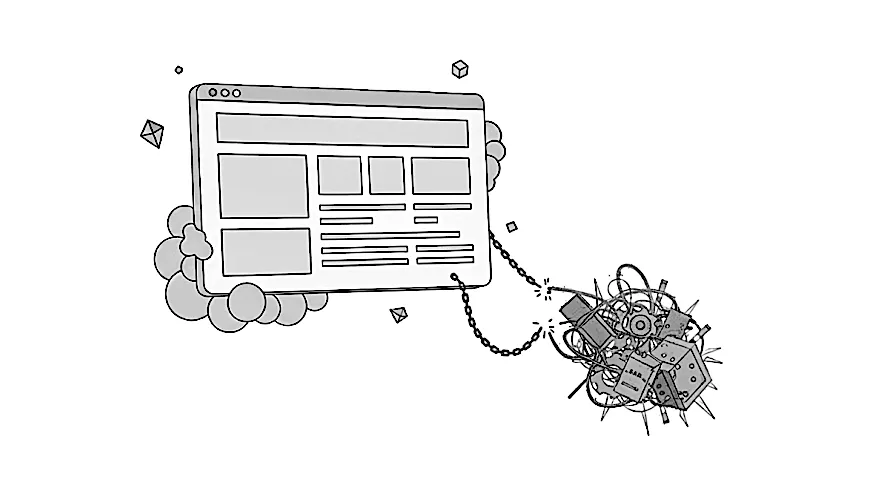
Some WordPress sites feel heavier than they need to be. Small edits take longer than expected, things slow down without warning, and it becomes hard to tell which parts are actually doing the work. Most of the time, the complexity didn’t arrive all at once. It built up quietly over the years.
Why complexity creeps in without anyone noticing
Complication usually starts with small, reasonable decisions. A plugin added to solve one problem. A page builder chosen because it seemed easier at the time. A theme feature turned on because it offered something useful. None of these choices are wrong on their own. It’s the combination, taken over years, that creates a setup with more layers than anyone planned.
Many sites also pass through several hands. One person adds a feature, another installs a plugin, and someone else adjusts the layout. Each change makes sense in isolation, but together they form a structure that feels less intentional.
Even tidy builds begin to show the weight of old experiments, half-removed tools, and features that once mattered but no longer play a part in the day-to-day running of the business.
Most complicated sites aren’t the result of one big mistake. They’re the outcome of years of small, reasonable choices that eventually stack up.
A practical resource where I explain how to think clearly about your website, so it feels easier to manage and better aligned with the way your business actually works.
How an over-complicated setup usually feels day to day
People often describe a sense of friction. Simple edits feel slow or fiddly. The admin area can seem cluttered or full of features that aren’t clearly connected to anything. Sometimes there’s a quiet worry that touching the wrong thing could break something else, even if nothing dramatic has happened before.
The overall experience becomes a little more cautious. Routine tasks take longer because you’re trying to avoid upsetting something that already feels delicate. Updating the site can also feel more delicate, especially when you’ve dealt with updates on complex sites in the past. The site still functions, but it no longer feels predictable. That shift in confidence is usually the first sign that adding something new becomes surprisingly difficult, even when what you’re trying to add seems small.
The patterns that often lead to a complicated WordPress site
The most common pattern is overlapping tools. A site might have a page builder, a theme with its own builder, and extra plugins trying to add similar features. Each one adds its own scripts, settings, and ways of doing things. Together, they create a tangle that feels heavier than the business needs.
Old features also play a part. Tools that were useful during an earlier phase of the business often remain switched on long after their purpose fades. Styling add-ons, alternative form builders, membership plugins, or abandoned page layouts all continue to run quietly in the background. Attempts to fix small issues by adding more plugins can also make the site feel harder rather than easier.
Over time, these layers settle into a patchwork of past decisions that no longer align with how the site is used today.
Why simplicity tends to create a more stable, predictable site
Simple setups aren’t about limiting what a site can do. They’re about letting each part of the system do its job clearly. When the foundations are clean, the whole site becomes more stable. Updates feel calmer. The admin screens feel lighter. You know what each part is for, and the experience becomes more predictable.
With fewer overlapping tools, there’s less that can go wrong. Performance improves naturally. Even small changes feel easier because the structure beneath them is steady, not strained. This is where a simple over complex approach makes a meaningful difference. It brings a sense of control back to the day-to-day running of the site.
A simpler setup doesn’t limit your site. It makes everything more stable, predictable, and easier to manage.
What a simpler approach usually looks and feels like
A simpler WordPress site usually has a sense of clarity. Each plugin serves a purpose. The theme or builder is chosen for long-term manageability rather than short-term shortcuts. Features match current needs rather than holding onto things that aren’t doing anything anymore.
The result is a site that feels more grounded. You can log in without feeling overwhelmed. Small updates stay small. There’s a sense that the whole setup is working with you, not against you. It supports the business instead of demanding attention.
Next step if your site feels more complicated than it should
If your website has become more complicated than it needs to be, my Builds and Enhance service explains how a simpler, more thoughtful structure can make updates, content changes, and everyday tasks feel far easier.