

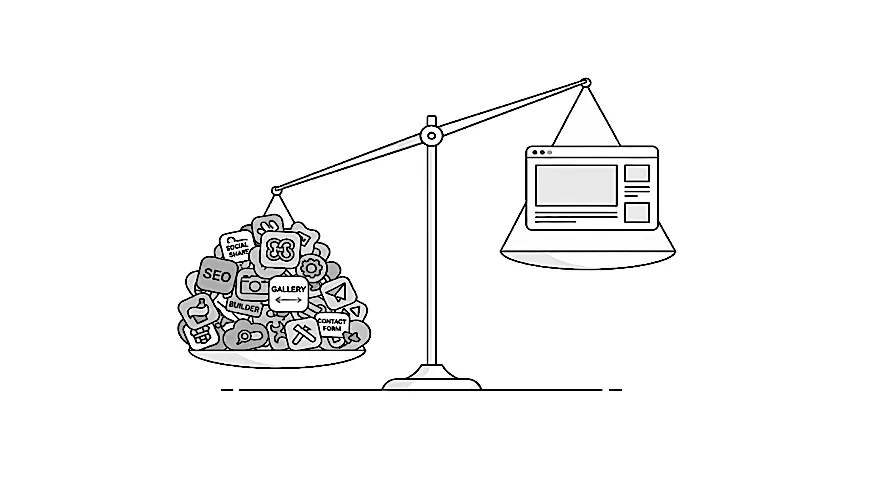
A lightweight WordPress setup often feels calmer, faster, and easier to live with. It keeps things simple without limiting what a business can do. This approach has become the foundation of how I build and improve websites because it consistently leads to a more stable, long lasting result.
Why simplicity usually leads to a smoother website
For most small businesses, complexity doesn’t add much value. What helps far more is a site that loads quickly, behaves predictably, and doesn’t create unnecessary friction.
When a build is kept light, the whole experience feels clearer. Pages respond reliably, tasks feel easier, and there’s a sense of steadiness that comes from not having too many layers working in the background.
Simplicity also makes it easier for a site to adapt. When the underlying setup is clean, small improvements or design changes can be made without worrying about knock-on effects. It becomes a website that works with you rather than against you.
A practical resource where I explain how to think clearly about your website, so it feels easier to manage and better aligned with the way your business actually works.
How websites become heavy without anyone noticing
Most websites don’t start out complicated. They become heavier bit by bit. A plugin added for a one-off feature. A design tool introduced because it sounded helpful. A builder layered on top of an older system. None of these decisions feel significant in the moment, but over time they create a site with more weight than anyone intended.
This shift is usually invisible until something feels off. Pages start to hesitate. Updates create tension. Small inconsistencies appear. It’s rarely the result of one bad decision. It comes from lots of small ones that slowly stack up.
Most heavy websites aren’t the result of complexity added all at once. They’re the outcome of years of small choices that gradually add more weight than anyone intended.
The signs that a site is carrying more weight than it needs
There are patterns that often show up when a site has become heavier than necessary. The dashboard may feel cluttered or full of settings that don’t seem to lead anywhere. Routine updates feel like a risk because past updates have caused issues. Everyday tasks take longer than they should, even when the site isn’t particularly large.
Visitors can feel this weight too. Pages may pause before loading, or the site feels slightly unpredictable when moving between sections. These aren’t always dramatic problems, but together they signal that the build is doing more work than it needs to.
Why lightweight builds tend to age better
Websites with fewer moving parts usually stay stable for longer. A lean setup gives updates less to collide with. There are fewer layers to maintain, fewer opportunities for conflicts, and a clearer foundation for future development.
Lightweight builds also tend to be easier to extend. When a new feature is needed, it can be added thoughtfully without wrestling with old structures.
This gives the site a longer lifespan, because it’s built on an approach that keeps things tidy and understandable behind the scenes.
A lighter build creates stability because there’s less to collide with, less to maintain, and far fewer opportunities for things to fall out of sync.
What a lighter approach means in real-world terms
Choosing a lightweight build doesn’t mean choosing a plain or limited website. It means being deliberate. Every tool has a purpose. Every feature has a reason to exist. The focus is on clarity rather than complexity.
In practice, this often results in a site that feels more open and flexible. Pages load smoothly. The structure remains consistent. You’re left with a website that supports your business without demanding constant attention.
This is the core of what I aim for in clean, simple builds that stay easy to live with as your business grows.
The kind of experience this approach creates for small business owners
For non technical business owners, a lighter build often feels like a relief. The dashboard is calmer. There are fewer interruptions. Everything feels more predictable. You don’t have to tiptoe around updates or worry about what might break next.
It’s also a helpful way to avoid the common website mistakes that make sites harder to manage than they need to be. When the structure is light and intentional, the whole experience feels more grounded and dependable.
This is why I favour lightweight, maintainable builds. They respect your time, reduce stress, and create a better foundation for growth. Most importantly, they help you feel more confident in your website.
If you’re exploring a simpler way to run your website
If your current setup feels heavy or restrictive, my Build and Enhance service shows what a cleaner, faster, and more maintainable rebuild could look like and how it can support your business over the long term.