

A Practical WordPress Rebuild
A practical WordPress rebuild focused on performance, clarity, and long-term reliability, showing how structural decisions support predictable day-to-day use.
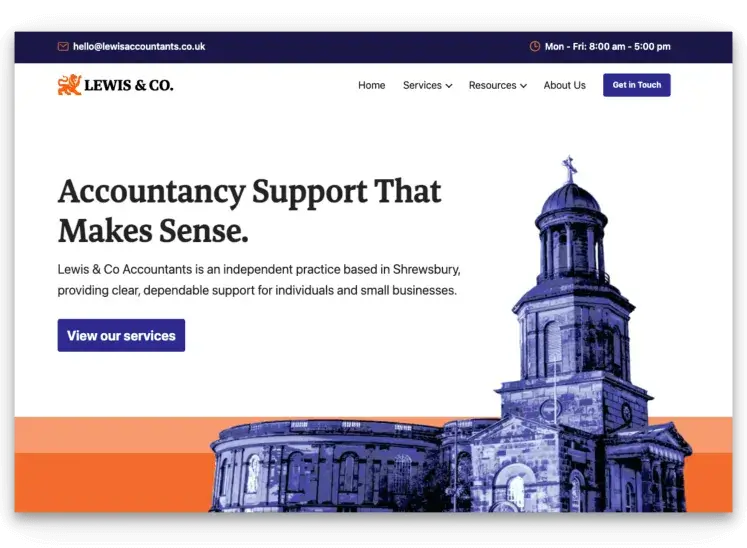
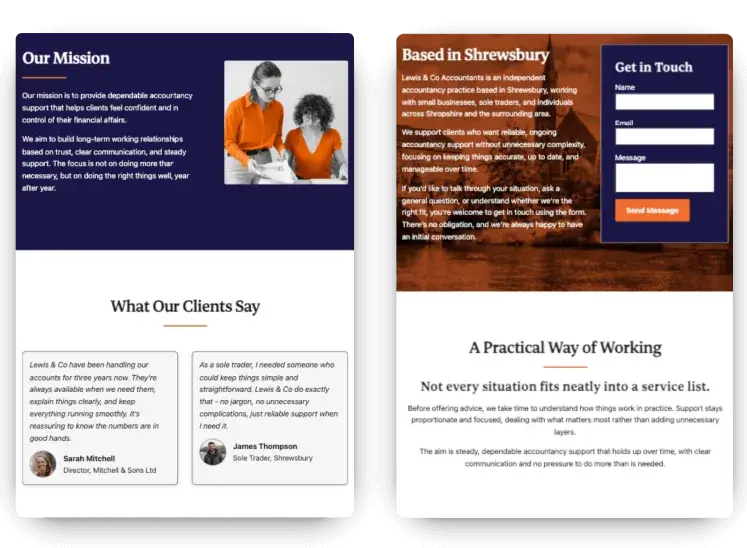

Project overview
This project involved rebuilding a small business WordPress site from the ground up, with responsibility for the full setup rather than just the visible pages.
The focus was on making early structural decisions that would hold up over time, particularly around theme choice, dependencies, and content structure. The aim was to create a setup that remains predictable to manage, where routine updates are low-risk and changes don’t introduce unexpected side effects.
The build prioritised clarity, performance, and a lightweight foundation that can be maintained and extended as the site evolves, without visual novelty or unnecessary complexity becoming a liability over time.
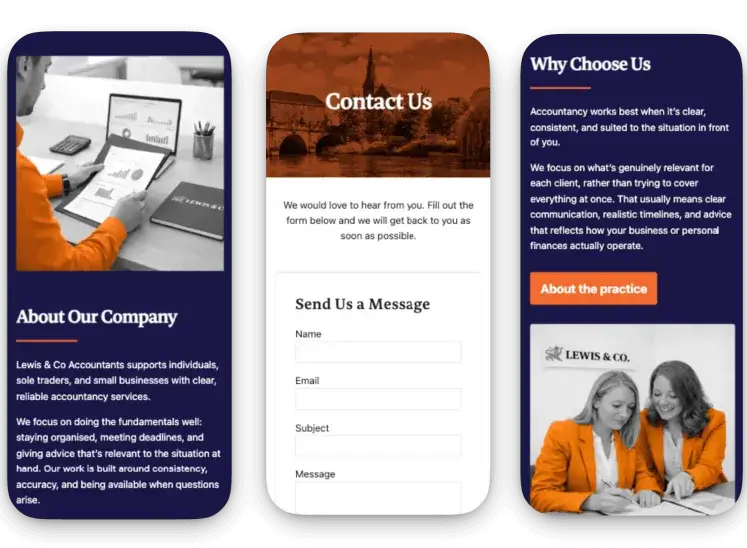
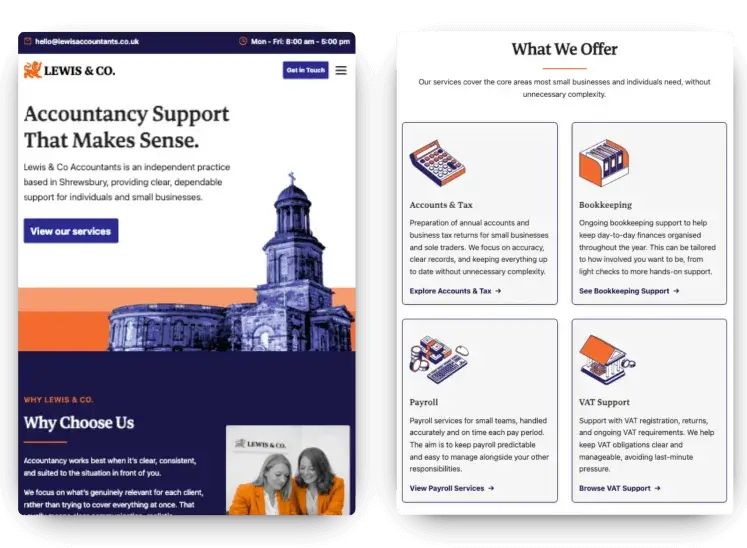

Build approach
Rather than layering new features onto an unstable base, the rebuild prioritised getting the fundamentals right first. Structure, layout, and dependencies were addressed early so the site remains predictable to manage as it evolves.
The sections below outline the key considerations that guided the rebuild, focusing on how the site is structured, managed, and maintained over time.
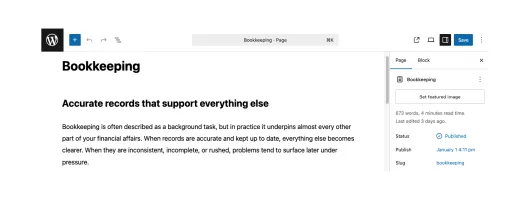
Predictable content editing
Page layouts are handled at the template level, while page content is edited through the WordPress editor, keeping routine updates straightforward and low-risk.
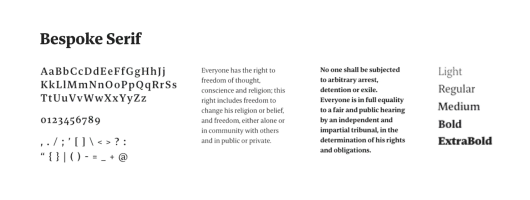
Typography and layout restraint
Font choices and spacing were prioritised for readability and consistency, so content remains comfortable to read and edit over time rather than tied to short-lived design trends.
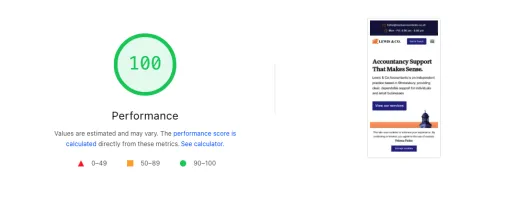
Performance as a baseline
Speed and accessibility were treated as default requirements, achieved through a lightweight setup rather than added later through heavy optimisation or plugins.
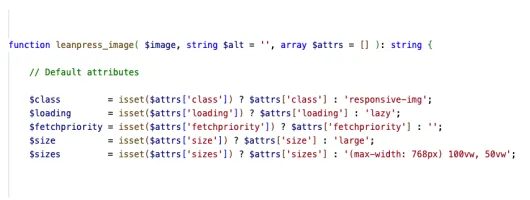
Reduced dependencies
Core functionality is handled within the theme where appropriate, keeping the setup simple and reducing reliance on third-party plugins as the site evolves.
Technical notes
- Performance and accessibility were treated as baseline requirements, achieved through a lightweight theme and restrained use of JavaScript rather than post-build optimisation.
- The site achieves full Lighthouse scores without relying on performance plugins or aggressive caching strategies.
- Core functionality is handled within the theme where appropriate, keeping the overall setup simple and reducing reliance on third-party plugins.
- The contact form is integrated directly into the site, avoiding an additional plugin and keeping the number of moving parts to a minimum.
Outcome
The result is a site that behaves predictably in day-to-day use. Pages load quickly, content updates are straightforward, and routine changes don’t introduce unexpected side effects.
By keeping the structure simple and the setup lightweight, the site is easier to maintain over time and less likely to require intervention as it grows or changes.