

Deciding whether your website needs a fresh start can feel unclear, especially if you manage the site yourself. A website rebuild can sometimes be the most practical way to solve ongoing issues and support your business as it grows. This guide helps you understand when a rebuild is the right step and what it can mean for your website long term.
Why many small business websites fall behind over time
Websites age gradually. What once felt modern can become an outdated website as design trends evolve, your business shifts direction, and technology moves forward.
Over time, small fixes, plugin swaps, and layout tweaks begin to build up. Even if each change seems harmless, they can slowly create clutter that makes your site slower, harder to manage, and less enjoyable for visitors.
As the underlying structure gets older, the effects become clearer. Pages may take longer to load, the mobile layout can start to look uneven, and familiar tools may stop running as smoothly as they once did.
Many small business owners only notice the problem once customers start mentioning issues or when the website begins to hold the business back.
It is easy to assume that if the site still loads, everything is fine. In reality, slow speeds, layout issues, and ageing plugins are often early signals that the site needs more than a quick tidy.
A practical resource where I explain how to think clearly about your website, so it feels easier to manage and better aligned with the way your business actually works.
The difference between redesigning and rebuilding a website
A redesign focuses on the appearance of your site. It updates layouts, refreshes colours and typography, and modernises the overall style. This is helpful when your branding has changed or when the design looks dated but the underlying structure is still solid.
A rebuild goes further. It renews the foundation beneath the design, including the theme, page builder, plugins, and the way content is organised. When deeper issues exist, a rebuild solves problems that a redesign alone cannot reach.
This distinction is important for small business owners. A redesign improves how the site looks, but it does not resolve deeper issues such as slow loading, outdated systems, or plugins that regularly clash. If the base structure is messy or worn out, a new design may not hold up for long.
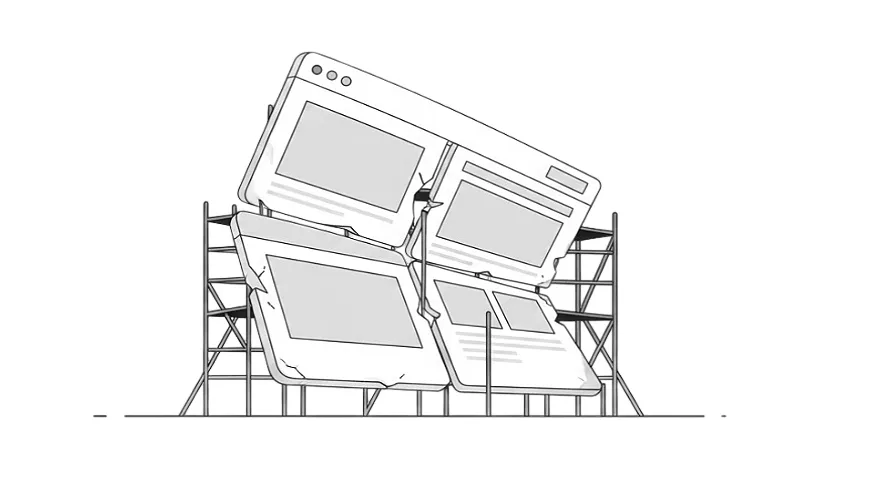
A redesign cannot fix a weak foundation. Lasting stability only comes from rebuilding the structure beneath the design.
Many people believe that switching to a new theme will fix everything. In most cases, if the foundation is the problem, changing the theme simply places new paint on top of an unstable wall. A rebuild is the only way to create lasting stability.
Clear signs your current site may need a rebuild
There comes a point where ongoing fixes demand more effort, time, and cost than starting again with a clean foundation. These signs usually indicate that a rebuild is worth considering.
1. Performance problems that keep returning
If the site feels slow or unstable, with sluggish pages, freezing sections, or unpredictable loading, it often points to deeper issues. Sometimes this behaviour is the surface sign of serious internal errors rather than a simple plugin glitch. Short term fixes may help briefly, but the symptoms tend to return because the foundation itself is struggling.
2. Mobile experience is inconsistent
Older sites were not built for today’s range of devices. If mobile layouts feel awkward or messy, or if some sections break entirely, the underlying technology may be falling behind.
3. Ongoing issues after updates
When plugins conflict regularly and updates break layouts or disable features, it can be a sign that the current setup is no longer working well with modern tools.
4. Content is difficult to manage
If updating pages feels confusing or if you worry about breaking something, the structure behind the site might not be arranged cleanly.
5. The technology is outdated
Some themes, builders, and plugins are no longer supported, which can lead to slower performance, reduced flexibility, and security risks.
6. Fixes no longer last
When you resolve one issue only for another to appear soon after, the foundation may need attention.
Many people reach this stage after trying to rebuild their website through small patches. At a certain point, older setups cost more to maintain than to replace.
Over time, small fixes add up, and a fresh build becomes the more practical, long-term solution.
When small fixes can still work instead of a full rebuild
Not every issue calls for a complete rebuild. Sometimes targeted improvements or a small redesign can keep your site running smoothly.
If the design still looks acceptable and the underlying technology is reasonably modern, a few focused updates may be enough. Replacing outdated plugins, tidying up navigation, or refining the layout can restore what a healthy site feels like without rebuilding everything.
Redesigning a website can also be effective when the underlying structure is stable. If performance is good and the theme is supported, a visual refresh can bring new life to your brand without deeper changes.
The dividing line is simple: surface level issues often suit small fixes, while repeated problems usually signal deeper causes.
Light improvements can extend the life of a healthy site, but they cannot stabilise a structure that is already struggling. Over time, the cost and energy spent on short term fixes can outweigh the benefits of a clean, future proof build.
How a rebuild helps your site work better long term
A rebuild is not about starting from scratch for the sake of it. It is about creating a cleaner, more reliable setup that supports your business well into the future.
Better speed and performance
Removing old bloat, unused plugins, and outdated technology leads to faster, more dependable pages. Visitors often feel the improvement immediately.
Improved mobile layout
Modern themes offer stronger mobile support, making your site easier to use across different screen sizes.
Simpler content management
A well structured build makes editing pages easier and less frustrating, which many owners appreciate straight away.
More design flexibility
Starting fresh gives you more freedom to update or extend the site without fighting against old systems.
Stronger SEO foundations
A rebuild can tidy up cluttered code, improve structure, and give search engines a clearer understanding of your content.
Some believe a rebuild only changes the appearance. In practice, it improves how everything works behind the scenes, making everyday management smoother and more predictable.
A simple example: when a rebuild is the practical choice
Imagine a consultant who set up their website several years ago using a theme that was popular at the time. As their business expanded, they added more plugins to support new features. Over time, updates began clashing, pages slowed down, and mobile layouts slipped out of place.
They fixed issues as they appeared, but the problems kept returning. Eventually, starting again was not about making the site look nicer. It was about building a reliable foundation that could support the business without constant interruptions.
This situation is common. When fixes pile up and the website becomes unpredictable, a rebuild often becomes the easier and more cost effective choice.
When it is worth getting a specialist to review your site
If you are unsure whether you need a redesign or a rebuild, a WordPress specialist can help you understand the difference. They can look beneath the surface, check for deeper issues, and explain what is happening in straightforward terms.
It may be worth asking for support when:
- problems continue to return even after fixes
- the site feels slow or unstable
- mobile layouts are noticeably out of place
- plugins conflict or break often
- the design looks dated and is difficult to edit
- you want clarity before investing in the next step
You do not have to make this decision alone. A specialist can explain whether a full rebuild is needed or whether a small business website redesign would be enough to move things forward.
How to move things forward
If your site is showing signs that it may be time for a fresh start, my Build and Enhance service explains what a modern rebuild involves and how it can give your site the clarity and stability it may be missing.